Book appointment   Call (516) 240-9072
Jutkowitz logo revised
Phone icon
  • Location & hours
  • Blog
  • Pay my bill
  • Patient login
  • Contact
  • Patient referrals
  • Careers
  • (516) 240-9072
    • Meet our team
    • Edward I. Jutkowitz, DMD
    • Rabia Mujtaba, DDS
    • All-on-4® by Nobel Biocare
    • Botox Fillers
    • Dental Implants
    • Emergency Dentist
    • Fillings, Crowns & Bridges
    • Gum Treatment
    • Implant-Supported Denture
    • Periodontics
    • Sedation Dentistry
    • Sleep Apnea Treatment
    • Teeth Whitening
    • Tooth Extractions
    • Dental payment options
    • Dental insurance
    • Dental financing
    • Good faith estimate
    • About our practice
    • Patient information
    • Dental reviews
    • Surgical instructions
    • Patient stories
  • Book appointment

Home

Blog

Treating Gum Disease Can Help Reduce Heart-Related Ailments

Treating Gum Disease Can Help Reduce Heart-Related Ailments

May 24, 2021 By Jutkowitz Periodontics & Implantology

Treating Gum Disease Can Help Reduce Heart-Related Ailments

Good oral hygiene is not a proven way of keeping heart disease at bay. However, given the correlation between heart disease and gum disease, you can reduce the severity of heart ailments with good oral care.

Gum Disease and Heart-Related Ailments

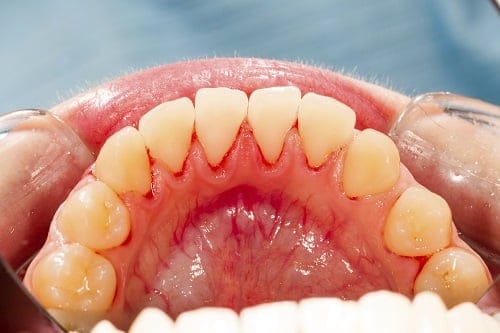
According to studies, individuals with gum disease have a higher risk of developing heart complications. When you have gum disease, your mouth has a higher count of bacteria. Disrupting your gum layer will provide entry for bacteria into your bloodstream. These bacteria can then flow throughout your body and cause inflammation. If the bacteria finds its way into your heart valves, it will cause an infection, which can be severe in individuals with artificial blood valves. A higher bacterium count from gum disease can thicken your carotid arteries. This will affect your blood pressure and blood flow to the brain, resulting in a stroke. Inflammation can also cause the hardening of the arteries, also called atherosclerosis. This condition affects blood flow into the heart and can trigger heart attack and stroke.

Diagnosis and Remedy

If treated early, gum disease is curable, which is why we encourage regular dental checkups. If you suspect gum disease, we will diagnose you by physically examining your mouth for gum recession and pockets, sensitive teeth, and plaque buildup. We will also take X-rays to check the health of the underlying bone. Once we conclude gum disease, we will commence treatment to prevent advancement to severe periodontal disease. Given the complications of heart disease, you should brush your teeth twice a day and floss regularly. You should also schedule regular checkups with us at least twice a year. During these exams, we will be able to detect gum disease early and administer treatment, preventing its advancement and adverse effects on your health. For more details on the relation between gum and heart disease, contact our office today.


Recent articles

July Blog 2025 Can Gum Disease Be Reversed Can Gum Disease Be Reversed?
July Blog 2025 How Your Summer Eating Habits and Diet May Be Affecting Your Teeth How Your Summer Eating Habits and Diet May Be Affecting Your Teeth
Beyond the Jaw Other Medical Uses for Botox Beyond the Jaw: Other Medical Uses for Botox

Book your appointment today.

70 Glen Cove Road, Roslyn Heights, NY 11577
Call our office at (516) 240-9072.
Book appointment
Jutkowitz Periodontics & Implantology logo ko
  • All-on-4® by Nobel Biocare
  • Botox Fillers
  • Dental Implants
  • Emergency Dentist
  • Fillings, Crowns & Bridges
  • Gum Treatment
  • Implant-Supported Denture
  • Periodontics
  • Sedation Dentistry
  • Sleep Apnea Treatment
  • Teeth Whitening
  • Tooth Extractions
  • Find a dentist near you
  • Privacy policy
  • Notice of Privacy Practices
  • Site map

© 2026 Jutkowitz Periodontics & Implantology. All rights reserved. The above-listed practice complies with applicable Federal civil rights laws and does not discriminate on the basis of race, color, national origin, age, disability, or sex. Notice of non‑discrimination.

(516) 308-2995